

Case Study: The Owned Audience Strategy
The Owned Audience Strategy
Why Ambitious Food Publishers Are Pivoting to Apps in the Age of AI
For the last decade, food publishing relied on a simple “Traffic Rental” model: Google sends a user, the user views an ad, and the user leaves.
In 2025, with the rise of AI Overviews (AIO) and Zero-Click searches, this model is fracturing. AI now answers queries like “how to boil an egg” or “paleo substitute for soy sauce” directly on the search page, bypassing the click entirely. A clear case in point: Food52 filed for Chapter 11 after years of declining traffic and revenue, highlighting how fragile ad‑driven food publishing has become.
The Solution
Successful publishers are shifting from “Traffic Rental” to “Owned Audiences.” By launching a companion app, they convert casual searchers into verified, daily users. This creates a “Data Moat” that insulates the brand from algorithm volatility.
The Impact of Native Apps
Source: RecipeToApp Portfolio Data (2025) vs. GetStream.io & Bootstrapped Ventures Benchmarks
The Playbook: Lessons from the Giants
We apply the exact strategies used by the world’s largest food media companies to independent blogs.
The Strategy: The New York Times realized they couldn’t rely on Google forever. They built a “Utility-First” app to turn readers into subscribers.
The Payoff: Zero-Click Protection. Instead of fighting for volatile keyword rankings, the app trained users to bypass Google entirely. NYT Cooking now has over 1 million paid subscribers accessing recipes directly through the app.
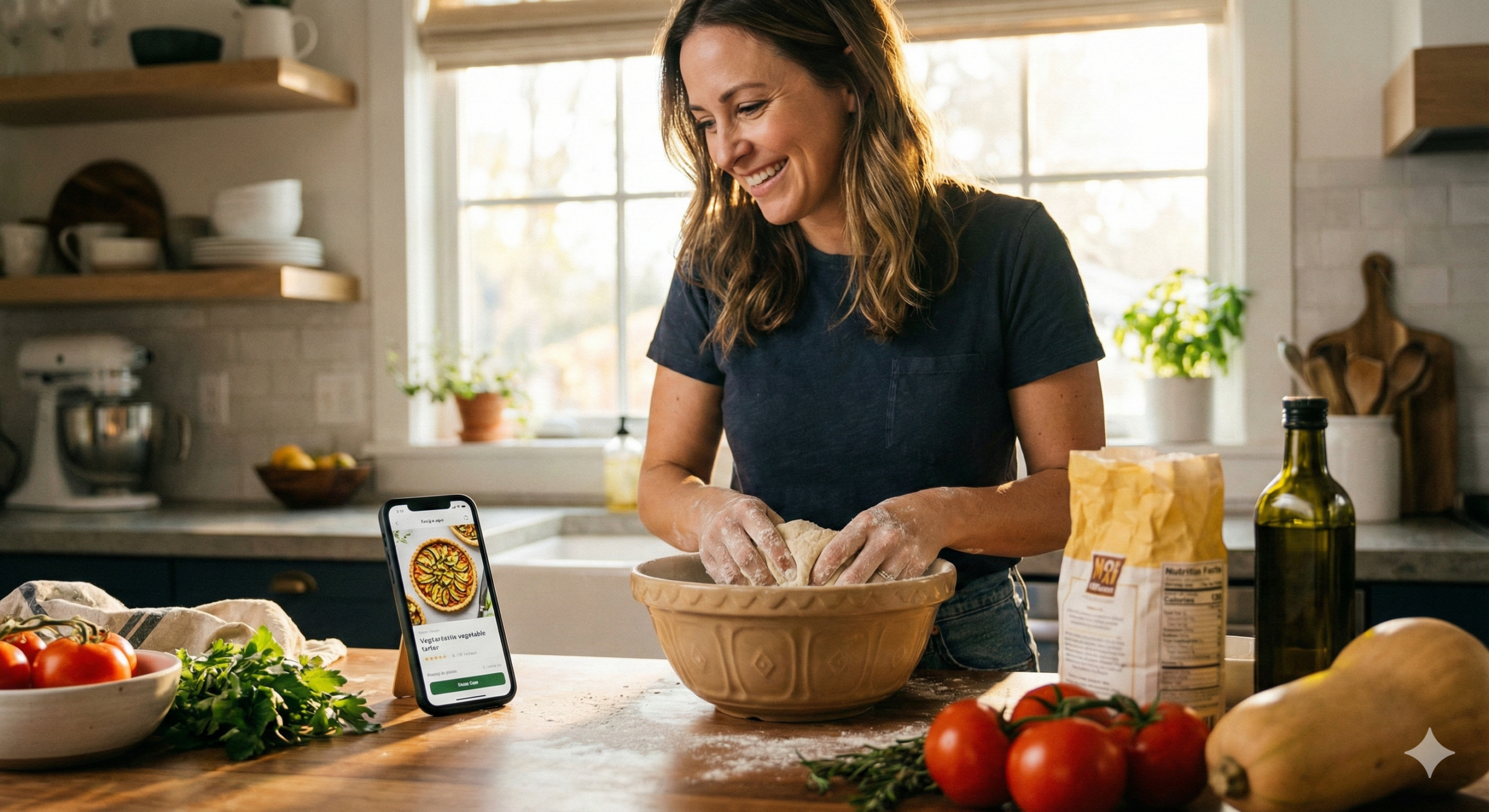
The Strategy: BuzzFeed faced a “Passive Viewer” problem. Millions watched videos; nobody cooked. They launched an app with “Cook Mode” to prevent the screen from dimming.
The Payoff: By solving the “messy hands” problem, the app stays open for the entire cooking duration. This shifts behavior from a 2-minute web scroll to an active cooking session, creating the high-fidelity engagement signals that algorithms prioritize.
How Apps Boost SEO
Why does having an app help your website rank better?
-
1Entity Verification: Having an app in the Stores verifies your brand as a legitimate “Entity” in Google’s Knowledge Graph. This creates a powerful E-E-A-T signal (Experience, Expertise, Authoritativeness, and Trustworthiness) that distinguishes real brands from generic websites.
-
2Brand Salience: The app builds deep loyalty. When these users return to Google (e.g., on desktop) or recommend you to friends, they search for “[Brand] Pie Crust” specifically. This spike in Branded Search Volume is a critical signal AI uses to identify authority figures.
-
3The “Halo Effect” on Web Rankings: Users often search Google out of habit, even with your App installed. When they click your result, Universal Links can open the app instantly. This creates a “Long Click” event—Google’s gold standard for satisfaction. Essentially, your App users act as “Super Voters,” sending data signals that boost your website’s rank for the rest of the world.
